Will Home Prices Crash in Phoenix?
No credible forecaster is calling for a 2008-style crash in Phoenix. Foreclosures sit around 1% of Maricopa County homes today, versus tens of thousands during the 2008 crisis. More than 90% of homeowners have positive equity, lending standards are tight, and the job market remains strong. Prices are cooling from pandemic peaks — that's a correction, not a collapse.
Why Do Crash Fears Keep Coming Back Every Time the Market Cools?
The 2008 crash left a permanent mark on how people think about real estate. Any sign of softening — rising inventory, longer days on market, a small price dip — triggers the same fear, even when the underlying data doesn't support it.
That fear is understandable, not irrational. If you're a homeowner watching your equity or a buyer worried about purchasing at the wrong moment, the question deserves a real answer instead of a dismissive one. So here's what the data actually shows.
How Is Today's Market Actually Different From 2008?
In 2008, subprime lending fraud meant nearly anyone could get a mortgage, unemployment hit 10%, and millions of borrowers couldn't pay. Prices fell because the underlying debt simply couldn't be serviced. Today's lending environment is the opposite — banks tightened standards after 2008, and today's buyers are qualifying for the loans they actually receive.
The equity picture is also inverted. In 2008, falling prices left many homeowners underwater, forcing foreclosures and short sales. Today, more than 90% of homeowners have positive equity, representing over $35 trillion nationally — which means distressed owners can sell traditionally and walk away with cash instead of losing the home to the bank.
What Do Foreclosure Numbers Actually Look Like Right Now?
Roughly 1% of Maricopa County homes are in some stage of foreclosure today, including early notices. In 2008-2009, the Valley saw well over 10,000 homes in pre-foreclosure in a single month, with foreclosed transactions making up over 40% of some months' total resale activity.
Today's foreclosure activity is a fraction of that era's distress — more of a ripple than a wave. Most current foreclosure filings represent isolated investor losses, not the systemic, market-wide distress that defined 2008.
Is a Correction the Same Thing as a Crash?
No, and the distinction matters. A crash is a sudden, severe price drop driven by forced selling — that's what happened in 2008, when prices fell roughly 27% nationally and even more sharply in Phoenix. A correction is a gradual cooling after a period of unsustainable growth.
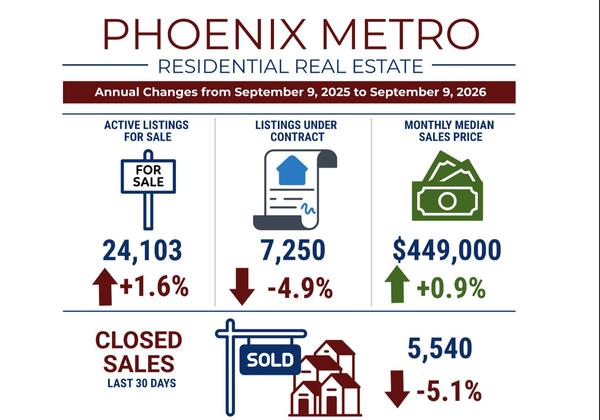
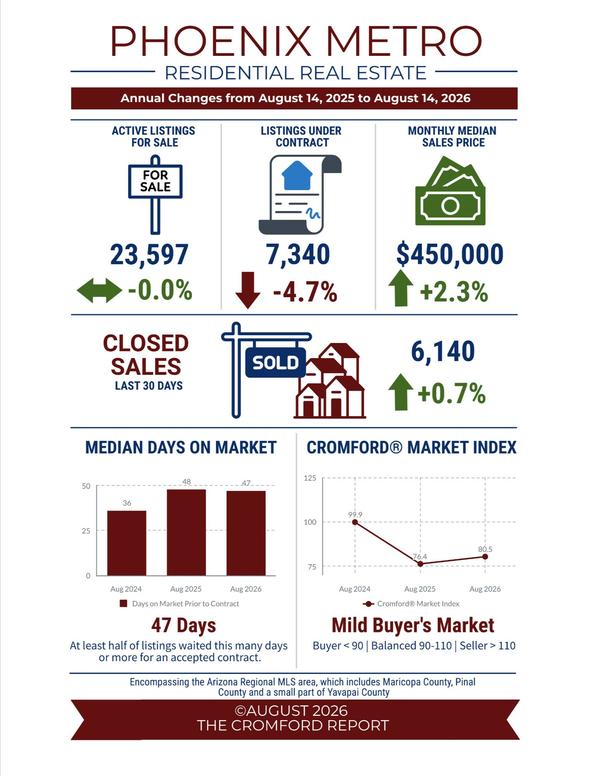
Phoenix's median price jumped from around $293,000 to $453,000 between 2020 and 2022 — growth that was never going to continue at that pace. What's happening now is prices leveling off and inventory rising back toward normal, not a market in freefall.
By the Numbers: 2026 vs. 2008
- Maricopa County homes in some stage of foreclosure today: about 1%
- Maricopa County foreclosures today vs. the 2008 crisis: roughly 1,300 vs. 50,000+
- Homeowners with positive equity nationally: over 90%
- Total national home equity: more than $35 trillion (NAHB)
- Homeowners nationally locked into a mortgage rate below 5%: about 80%
- Phoenix median home price: roughly $455,000-$480,000, essentially flat year over year
- Nationwide price decline during the 2008 crash: about 27%
- 2026 sales volume: up roughly 12% year over year
The Bottom Line
Phoenix is not heading toward a 2008-style crash — the foreclosure numbers, equity levels, and lending standards simply don't support that outcome. What's happening is a normal correction after an unsustainable pandemic-era run-up, and that's actually good news if you're trying to buy. Don't let 2008-era fear talk you out of a decision the current data doesn't justify.
Frequently Asked Questions
- Will Phoenix home prices crash like they did in 2008?
No credible forecaster expects that. Foreclosures, equity levels, and lending standards are fundamentally different today than they were during the 2008 crisis.
- How many homes are in foreclosure in Phoenix right now?
Roughly 1% of Maricopa County homes are in some stage of foreclosure, compared to tens of thousands during the 2008 crash — a fraction of that era's distress.
- What's the difference between a correction and a crash?
A correction is a gradual cooling after unsustainable growth; a crash is a sudden, severe drop driven by forced selling. Phoenix's current slowdown fits the first description, not the second.
- Do most Phoenix homeowners have equity in their homes?
Yes — more than 90% of homeowners nationally have positive equity, which removes the pressure that forced mass foreclosures in 2008.
- Why does the crash question keep coming up?
The 2008 crisis left a lasting psychological mark, so any sign of cooling — rising inventory, longer days on market, softer prices — triggers the same fear, even when the data doesn't support it.
About Brian Eastwood
Brian Eastwood is a Realtor based in Phoenix, Arizona, helping local buyers and sellers navigate the Valley's shifting market with straightforward, data-driven guidance. Reach out anytime to talk through your specific numbers and timeline.
Categories
Recent Posts