Are Sellers More Willing to Negotiate in the Fall?
Short answer: yes — and in the Phoenix area right now, more so than usual. But “more willing to negotiate” doesn't mean every seller rolls over. Here's what's actually driving fall negotiating power, and how to use it.
Why Fall Changes the Equation
Nationally, real estate activity has a predictable seasonal rhythm. Buyer competition typically peaks in spring and early summer, then cools as fall arrives — fewer people are actively house hunting, kids are back in school, and the holidays are approaching. The National Association of Realtors' seasonal data shows this shift usually starts in July, with days on market climbing through September, October, and November as buyer competition thins out.
That drop in competition changes the leverage equation. A seller who fielded ten offers in May had little reason to negotiate. That same seller, listing in October with far less foot traffic, is a different conversation.
There's also a motivation factor. Sellers who list in fall — especially November and December — are rarely doing it casually. Many are dealing with job relocations, life changes, or a desire to close before year-end. That kind of motivation tends to translate directly into flexibility on price, closing costs, or repairs.
What This Looks Like in the Valley Right Now
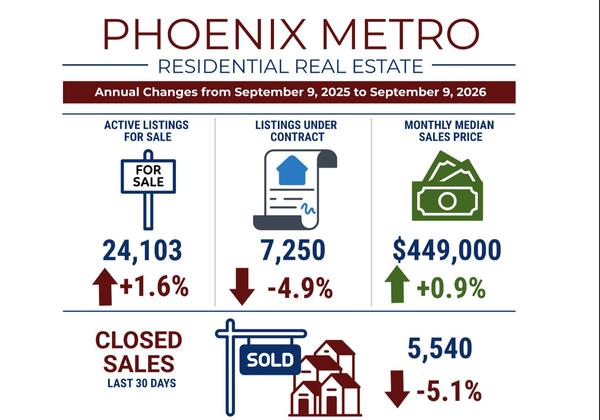
Fall seasonality is only half the picture this year — Greater Phoenix is already leaning toward buyers before the season even shifts, which stacks the advantage.
Current Valley data paints a fairly consistent picture: inventory has grown significantly compared to recent years, homes are taking longer to sell, and a meaningful share of active listings have already had at least one price reduction. Sale-to-list price ratios in the high-90s (rather than sellers routinely getting over asking) confirm that most transactions now involve real back-and-forth rather than take-it-or-leave-it offers.
Here's how that plays out city by city:
- Phoenix proper is sitting in balanced-to-buyer territory, with homes taking around 50–60 days to sell and a notable share of listings carrying price cuts.
- Scottsdale is the exception — the luxury tier has stayed more resilient, with some segments still seeing price growth. Negotiating room exists but is thinner here than elsewhere.
- Chandler and Tempe remain more competitive than the Valley average, but even here, homes that have sat for a few weeks are seeing more flexibility than they would have a year or two ago.
- Gilbert and Mesa are showing some of the clearest buyer leverage in the East Valley — longer days on market and sellers more willing to cover closing costs or make repairs to keep a deal moving.
- Northern Pinal County (San Tan Valley, Maricopa) continues to see builders sitting on completed new-construction inventory, which is pushing rate buydowns and incentives well beyond what resale sellers typically offer.
What “Negotiate” Actually Means Right Now
Sellers loosening up in fall doesn't necessarily mean slashing the list price. In this market, negotiation tends to show up in a few specific ways:
- Price reductions on homes that have already sat for a few weeks without offers.
- Seller-paid closing costs, which can meaningfully lower your cash needed to close.
- Rate buydowns, especially from motivated sellers or builders trying to offset today's mortgage rates.
- Repair credits or completed repairs — something sellers were far less willing to do during the competitive years, when buyers waived inspections just to win.
The homes most likely to see this flexibility are the ones that have already been sitting — not the fresh, well-priced listings that come on in October and still generate quick interest. Pricing and condition still matter more than the calendar.
The Catch: Not Every Seller Is Equally Motivated
It's worth being honest about the limits here. A well-priced, move-in-ready home in a desirable Chandler or Tempe neighborhood can still generate solid interest in the fall — seasonality softens competition, it doesn't eliminate it. And in tighter luxury segments like parts of Scottsdale, sellers with genuine equity and no urgency to sell may simply wait out a slow season rather than negotiate.
The buyers who benefit most from fall timing are the ones targeting homes that have already been on the market a while, in submarkets where inventory has genuinely grown — which, right now, describes a good part of the Valley outside the luxury tier.
So, Is Fall a Good Time to Negotiate?
If you're house hunting in Phoenix, Gilbert, Mesa, Tempe, Chandler, or Northern Pinal County this fall, the conditions are genuinely in your favor compared to the spring rush — more inventory, longer days on market, and sellers more open to covering costs or making repairs to close a deal. Scottsdale's higher end is the one area where that leverage is thinner.
Next step: Negotiating power varies a lot by home, neighborhood, and how long a listing has been sitting — the kind of detail a national headline can't tell you. Let's look at the specific homes you're considering and figure out where you actually have leverage. 📲 Call or text me, Brian Eastwood, at 602-330-6813. It can be overwhelming, but I’m here to help!
Market data reflects recent reporting on the Phoenix-Mesa-Scottsdale metro area, including ARMLS, Realtor.com, and NAR seasonal trend analysis, as of mid-2026. Conditions vary by submarket and can shift; figures are estimates, not guarantees.
Categories
Recent Posts