We Paused Earlier This Year — Should We Start Looking Again?

If you stepped back from house hunting sometime this spring or summer, that was a reasonable call, not a failure of nerve. Rates felt stuck, prices felt uncertain, and "wait and see" made sense at the time. A lot of buyers made the same decision.
The question now is whether anything's actually different, or whether you'd just be walking back into the same frustrating market. It's worth answering honestly, because some things have shifted and some genuinely haven't.
Let's start with what hasn't changed
Mortgage rates haven't gotten better since spring — if anything, they've drifted higher, and they're now pushing up toward 7%. That number has moved around quite a bit in just the past couple of weeks, so treat it as a general read on where things stand rather than an exact figure to plan around.
If you paused hoping to come back to 5% financing, that hasn't happened, and it's not close. I'd rather tell you that plainly than have you wait another six months for something that isn't coming — rates are the one piece of this story that's moved in the tougher direction, not the easier one.
What has actually changed
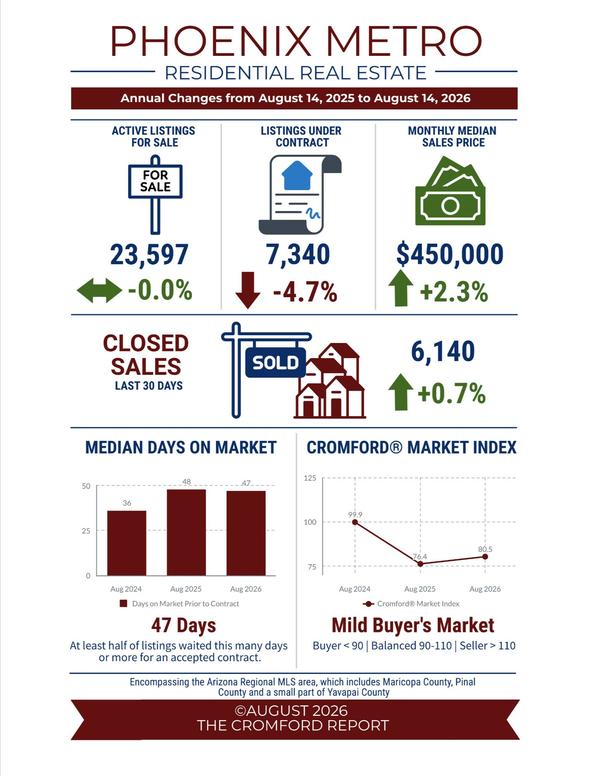
This is the part worth paying attention to. Inventory across the Valley is up substantially compared to earlier this year — there are simply more homes on the market than there were when you paused. That alone changes the dynamic in a way that matters more than a lot of buyers expect.
More listings means less pressure. You're not competing against eight other offers on the first decent house you see. In a lot of areas, you can actually take a second look, sleep on a decision, and still be in the running.
Price cuts have become common, too. Across the metro, a large share of active listings have already had at least one reduction — in some cities, it's the majority of what's on the market. Sellers who listed in spring expecting last year's prices are adjusting, which puts real negotiating room back in your hands.
That negotiating room looks different depending on where you're looking. Chandler, Tempe, and Gilbert have all seen prices soften modestly since earlier in the year — nothing dramatic, but enough that you're not chasing a rising number anymore. Scottsdale is the exception; it's still appreciating, driven mostly by the luxury end of that market, so if that's your target area, don't expect the same slack.
Something else has changed that's easy to miss: how many of those listings already have a price cut attached. Earlier this year, a reduction usually meant a seller was getting nervous. Now it's common enough that it's closer to standard practice, which shifts the tone of the conversation before you've even made an offer.
Mesa and the communities out toward San Tan Valley and Apache Junction have stayed relatively affordable, and that affordability gap hasn't closed. The West Valley tells a similar story — areas like Avondale, Goodyear, Buckeye, Litchfield Park, Waddell, Surprise, and parts of Glendale and Peoria generally offer more attainable price points than what you'll find closer to Scottsdale or Tempe, though inventory and competition still vary from one community to the next. If budget was part of why you paused, either side of the Valley is worth another look.
The competition question, answered honestly
Here's the thing that probably matters most if you paused because house hunting felt exhausting: homes are sitting on the market longer now. In a lot of these cities, that's stretched to somewhere between six and ten weeks, compared to homes moving in days a couple of years ago.
That doesn't mean every house sits — well-priced, well-maintained homes in good locations still move quickly. But it does mean you're less likely to lose three homes in a row to a buyer who came in $20,000 over asking with no contingencies. The frantic pace that probably burned you out earlier this year has eased.
Why timing feels different than it did in spring
Spring and early summer are typically when the most buyers are active, which means more competition for the same pool of listings. Fall tends to thin that out — some buyers give up for the year, some are waiting for after the holidays, and sellers who've had a home sit since summer are often more motivated to make a deal before year-end.
None of that changes the mortgage math. But it does mean the negotiating environment right now is arguably better than it was when you were last actively looking, even with borrowing costs higher than they were.
Before you jump back in
It's worth checking a couple of things before you start touring again, especially if it's been a few months. A pre-approval from earlier this year may not reflect where rates or your own finances sit today, so get that refreshed first rather than assuming it still holds.
It's also worth revisiting your budget against what's actually changed. If you were priced out of Chandler or Tempe in the spring, softer prices there might put homes back within reach that weren't before. If you were looking in Scottsdale, the opposite is true, and it's better to know that going in than to be discouraged three showings later.
And if the reason you paused wasn't really about the market — a job change, a move that got delayed, wanting more time to save — that's worth being honest with yourself about too. The market conditions above matter, but they don't override your own timing if something else is genuinely driving the decision.
Where the negotiating room is strongest right now
If flexibility and selection matter more to you than a specific zip code, Mesa and the communities out toward San Tan Valley and Apache Junction currently offer some of the most room to negotiate, partly because builders in those areas are actively competing with resale listings using rate buydowns and incentives. The West Valley — Avondale, Goodyear, Buckeye, and nearby communities — tends to follow a similar pattern, with builders competing hard for buyers on price. That competition works in your favor even if you're buying resale, not new construction.
Chandler and Tempe are close behind — homes there have been sitting longer than they did a year ago, and sellers are responding to that with price adjustments rather than holding firm. Gilbert has cooled more modestly and still moves a bit faster, so if you're set on that area, expect slightly less slack than elsewhere.
So should you start again?
I can't answer that for you — it depends on your specific budget, your timeline, and what you actually need out of a home. But I can tell you the market you'd be re-entering isn't the same one that wore you down earlier this year.
There's more to choose from, sellers are more willing to negotiate, and you're not up against the level of competition that made spring feel impossible. Rates being higher is real, and I won't pretend otherwise — but a lot of the other pressure that made buying feel unmanageable has genuinely eased.
Let's take another look together
If you're open to it, I'd like to sit down and revisit where things stand — your budget, what you're looking for, and which of these communities actually fit now that the picture has changed. No pressure to jump back in before you're ready. Just a clear-eyed check-in so you know what's realistic if and when you are.
About Brian Eastwood
Brian Eastwood is a Realtor based in Phoenix, Arizona, helping local buyers and sellers navigate the Valley's shifting market with straightforward, data-driven guidance. Reach out anytime to talk through your specific numbers and timeline. 📲 Call or text me, Brian Eastwood, at 602-330-6813. It can be overwhelming, but I'm here to help!
Recent Posts