
Here’s What a Recession Could Mean for the Housing Market
Recession talk is all over the news, and the odds of a recession are rising this year. And that leaves people wondering what would happen to the housing market if we do go into a recession.
Let’s take a look at some historical data to show what’s happened in housing for each recession going all the way back to the 1980s.
A Recession Doesn’t Mean Home Prices Will Fall
Many people think that if a recession hits, home prices will fall like they did in 2008. But that was an exception, not the rule. It was the only time we saw such a steep drop in prices. And it hasn’t happened since.
In fact, according to data from CoreLogic, in four of the last six recessions, home prices actually went up (see graph below):
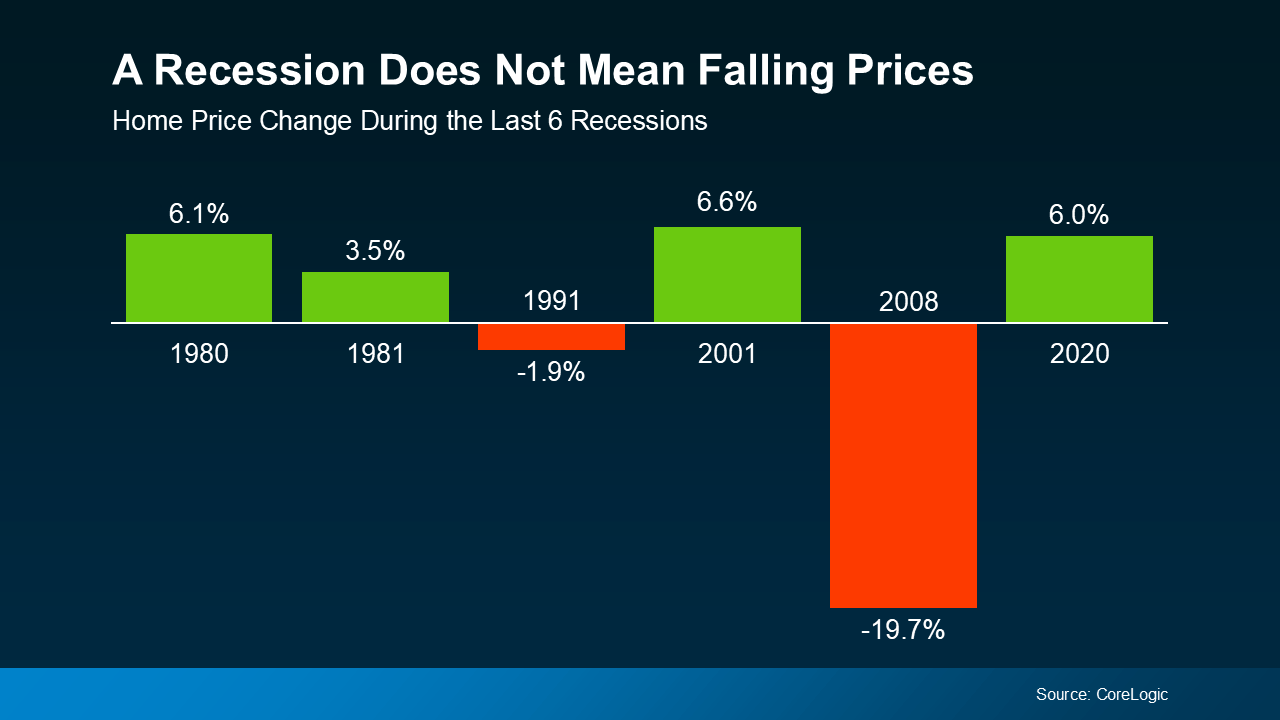
So, if you’re thinking about buying or selling a home, don’t assume a recession will lead to a crash in home prices. The data simply doesn’t support that idea. Instead, home prices usually follow whatever trajectory they’re already on. And right now, nationally, home prices are still rising at a more normal pace.
Mortgage Rates Typically Decline During Recessions
While home prices tend to stay on their current path, mortgage rates usually drop during economic slowdowns. Again, looking at data from the last six recessions, mortgage rates fell each time (see graph below):
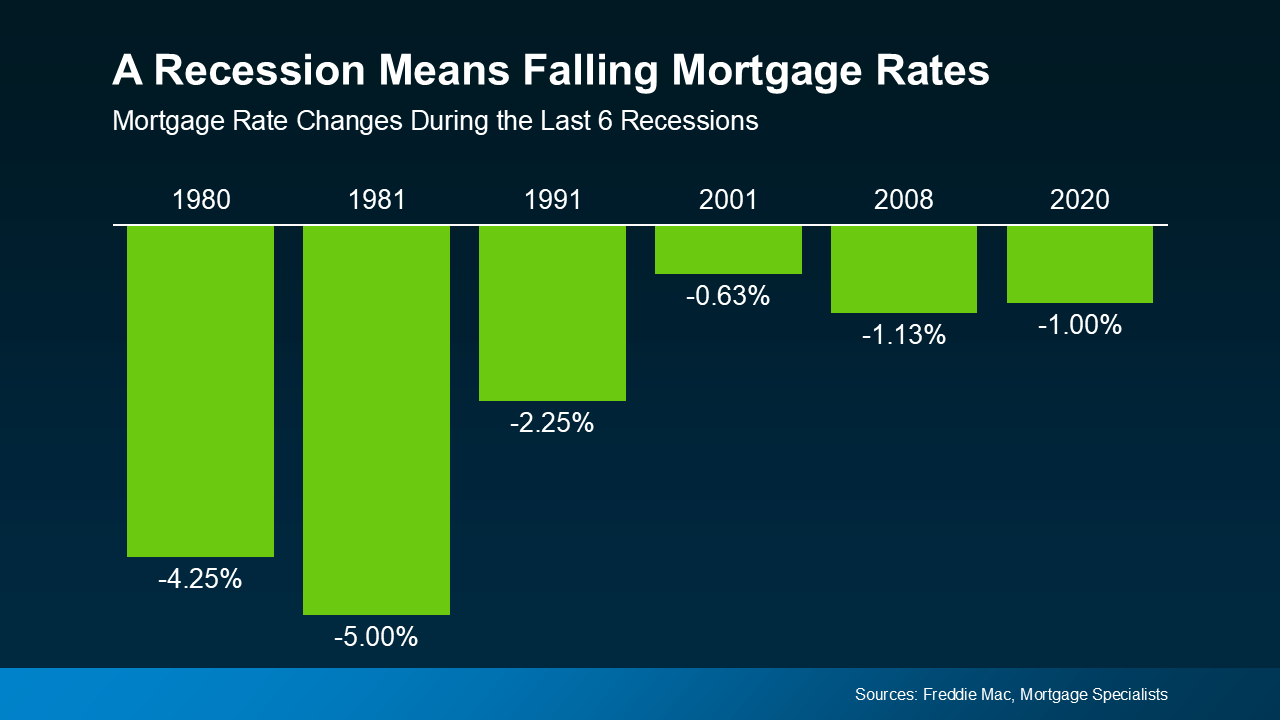
So, a recession means mortgage rates could decline based on the data. While that would help with affordability, don’t expect the return of a 3% rate.
Bottom Line
The answer to the recession question is still unknown, but the odds have gone up. But that doesn’t mean you have to wonder about the impact on the housing market – historical data tells us what usually happens.
When you hear talk about a possible recession, what concerns or questions come to mind about buying or selling a home? Reach me at https://linktr.ee/brianeastwoodrealtor. It can be overwhelming, but I’m here to help you.
Let’s take a look at some historical data to show what’s happened in housing for each recession going all the way back to the 1980s.
A Recession Doesn’t Mean Home Prices Will Fall
Many people think that if a recession hits, home prices will fall like they did in 2008. But that was an exception, not the rule. It was the only time we saw such a steep drop in prices. And it hasn’t happened since.
In fact, according to data from CoreLogic, in four of the last six recessions, home prices actually went up (see graph below):
So, if you’re thinking about buying or selling a home, don’t assume a recession will lead to a crash in home prices. The data simply doesn’t support that idea. Instead, home prices usually follow whatever trajectory they’re already on. And right now, nationally, home prices are still rising at a more normal pace.
Mortgage Rates Typically Decline During Recessions
While home prices tend to stay on their current path, mortgage rates usually drop during economic slowdowns. Again, looking at data from the last six recessions, mortgage rates fell each time (see graph below):
So, a recession means mortgage rates could decline based on the data. While that would help with affordability, don’t expect the return of a 3% rate.
Bottom Line
The answer to the recession question is still unknown, but the odds have gone up. But that doesn’t mean you have to wonder about the impact on the housing market – historical data tells us what usually happens.
When you hear talk about a possible recession, what concerns or questions come to mind about buying or selling a home? Reach me at https://linktr.ee/brianeastwoodrealtor. It can be overwhelming, but I’m here to help you.
Categories
Recent Posts

Selling Your Home in Scottsdale: Step-by-Step Guide

Biltmore Private Clubs and Recreation

Moving to Biltmore as a Remote Worker

Pros and Cons of Living in Biltmore

Biltmore Commute Guide: Getting Around After the Move

Biltmore Daily Living Guide: Schools, Healthcare & Services

Cost of Living in Scottsdale Beyond Home Prices

Biltmore Luxury Real Estate Guide

Selling a Starter Home in Scottsdale: Maximize Proceeds

Biltmore Relocation Guide: Everything Before the Move